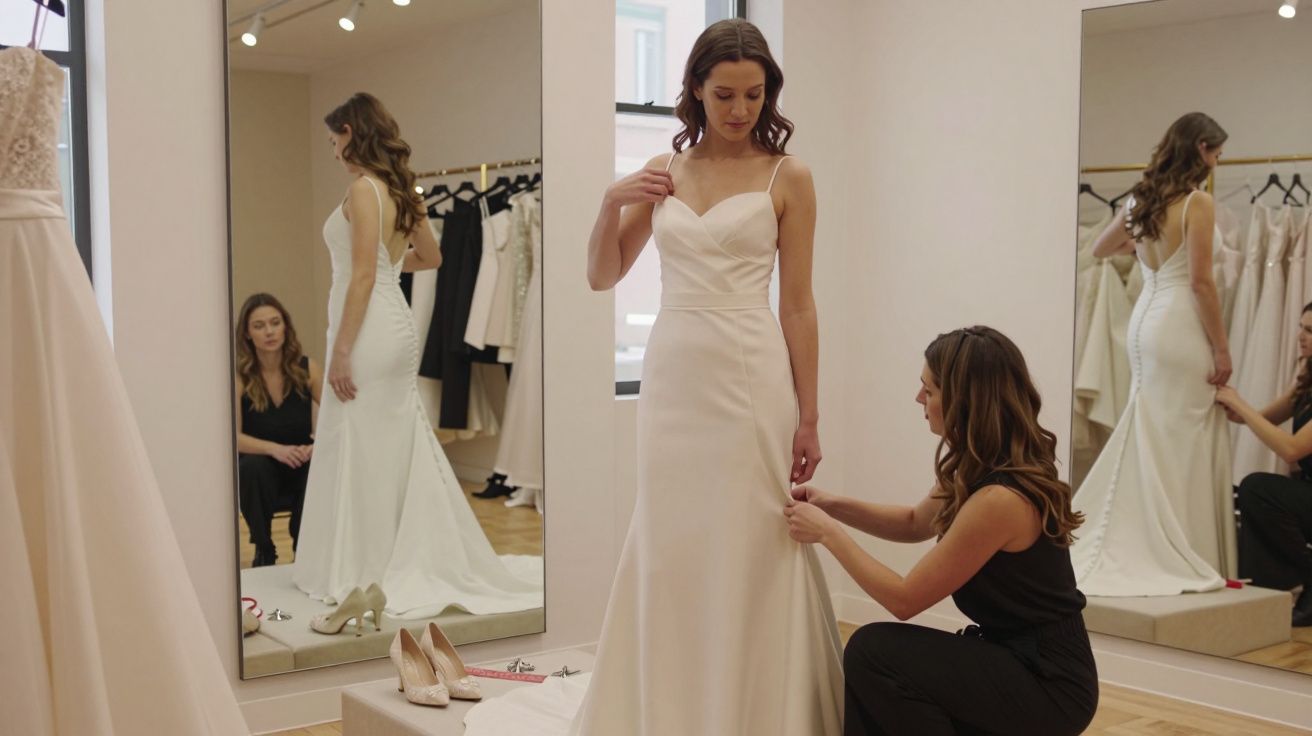
It’s a strange, slightly deflating moment: you step into the boutique, the hanger comes off the rail, and the dress you’ve imagined for months lands on your body and feels… wrong. Wedding dress alterations are the part nobody daydreams about, yet they’re often where the hidden potential of a gown finally shows up-because most dresses aren’t designed to fit you straight off a sample rail. They’re designed to be made to fit, and that difference matters more than lace, labels, or lighting.
You look in the mirror and your brain starts bargaining. Maybe it’s the bra. Maybe it’s the shoes. Maybe you’re just not a “wedding dress person”. Meanwhile the fabric is quietly doing what fabric does: responding to gravity, seams, and the exact shape of your shoulders, ribs, and hips-not the shape the designer drafted on paper.
The myth of “the one” (and the reality of the sample)
Bridal shopping sells a tidy story: you put on The Dress, you cry, it’s perfect, end of. But most of what you try on is a sample that’s been stretched, clipped, pinned, and steamed through dozens of bodies and a few years of being hauled in and out of bags. It’s not neutral material; it’s a working garment.
Samples are also built for the average of a size range, not for the specifics of your proportions. If your waist is two sizes smaller than your bust, or your torso is longer than the pattern assumes, or your shoulders are narrower than the sample’s straps, you will feel it immediately. Not as a clear “this is too big”, but as a vague discomfort that makes you doubt your taste.
And then there’s the clipping. Clips are a brilliant sales tool, but they change the way a dress hangs. They pull fabric backwards, flatten shape at the front, and can make a neckline look like it’s behaving when it’s actually just being held at gunpoint.
Where “wrong” actually comes from: four tiny fit problems that shout
Most dresses don’t feel off because they’re ugly. They feel off because the load-bearing points-the places a gown should hold you-aren’t in the right place yet.
Here are the usual culprits:
- The bust isn’t anchored. If the cups sit too low or too wide, everything above the waist feels insecure, even if the waist is technically “your size”.
- The waist is drifting. A waist seam that sits even 2–3 cm too low makes your torso feel boxy and your skirt feel heavier, because the dress is hanging from the wrong spot.
- The straps/shoulders are doing nothing. Straps that are a fraction too long will make you hunch without noticing. Sleeves that bite will make you hold your arms differently, which changes the whole silhouette.
- The hem length lies. A dress that’s too long doesn’t just puddle; it drags the skirt down, pulls at the hips, and makes the bodice feel like it’s sliding.
It’s why you can have a dress that looks close in photos but feels like you’re wearing someone else’s outfit in real life. Comfort and proportion are linked, and bridal fabric is unforgiving about it.
The fitting room tells you how a dress could look, not how it will
Bridal mirrors are persuasive, but they’re also a controlled environment: a plinth, good lighting, a consultant who knows where to clip, and a moment when you’re standing still with your shoulders back. Real life is sitting down, hugging people, lifting your arms, walking on grass, and breathing after a glass of fizz.
A dress that feels “fine” on the stand can become relentless once you move. Equally, a dress that feels disappointing in the moment can become shockingly right once the structure is tailored to your body rather than borrowed from a sample.
If you only remember one thing, make it this: fit issues disguise themselves as style issues. The neckline you “hate” might just be sitting too low. The skirt you think is “too bulky” might be dragging because it’s unhemmed. The bodice you think is “too revealing” might simply need the cups lifted and the straps shortened so it sits where it was designed to sit.
What wedding dress alterations actually change (and what they can’t)
There’s a quiet relief in learning what’s possible, because it turns panic into a plan. Wedding dress alterations aren’t about rescuing a bad dress; they’re about finishing a dress that was intentionally left unfinished for your body.
Common alterations that change the entire feel:
The foundation work that makes you stop fidgeting
A good seamstress will often start where the dress should carry you.
- Adjusting and stabilising bust cups (lift, narrow, replace, add support)
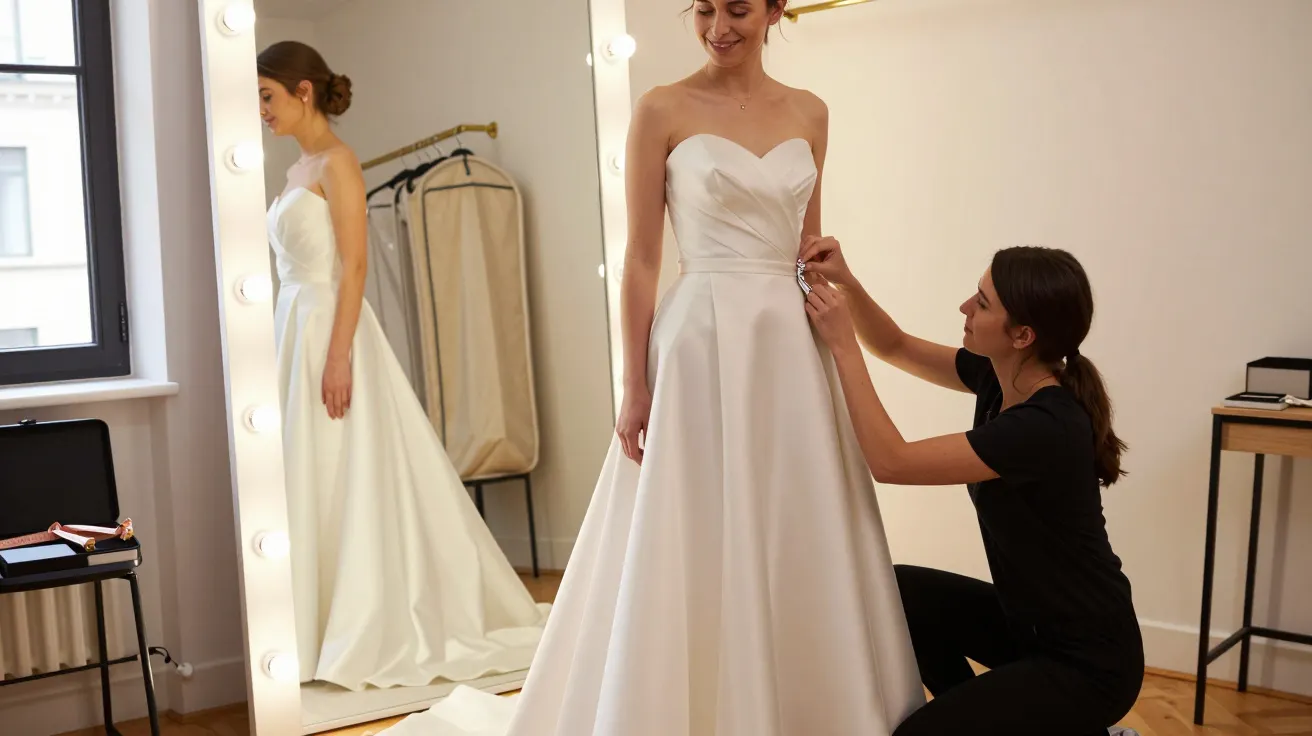
- Taking in the bodice through the bust, waist, and ribs so it grips rather than floats
- Shortening straps or reshaping shoulders so the neckline stays put
- Adding boning or inner waist stays for structure in strapless styles
The proportion work that makes it look “intentional”
This is where the mirror moment happens, usually without drama. You just look… more like yourself.
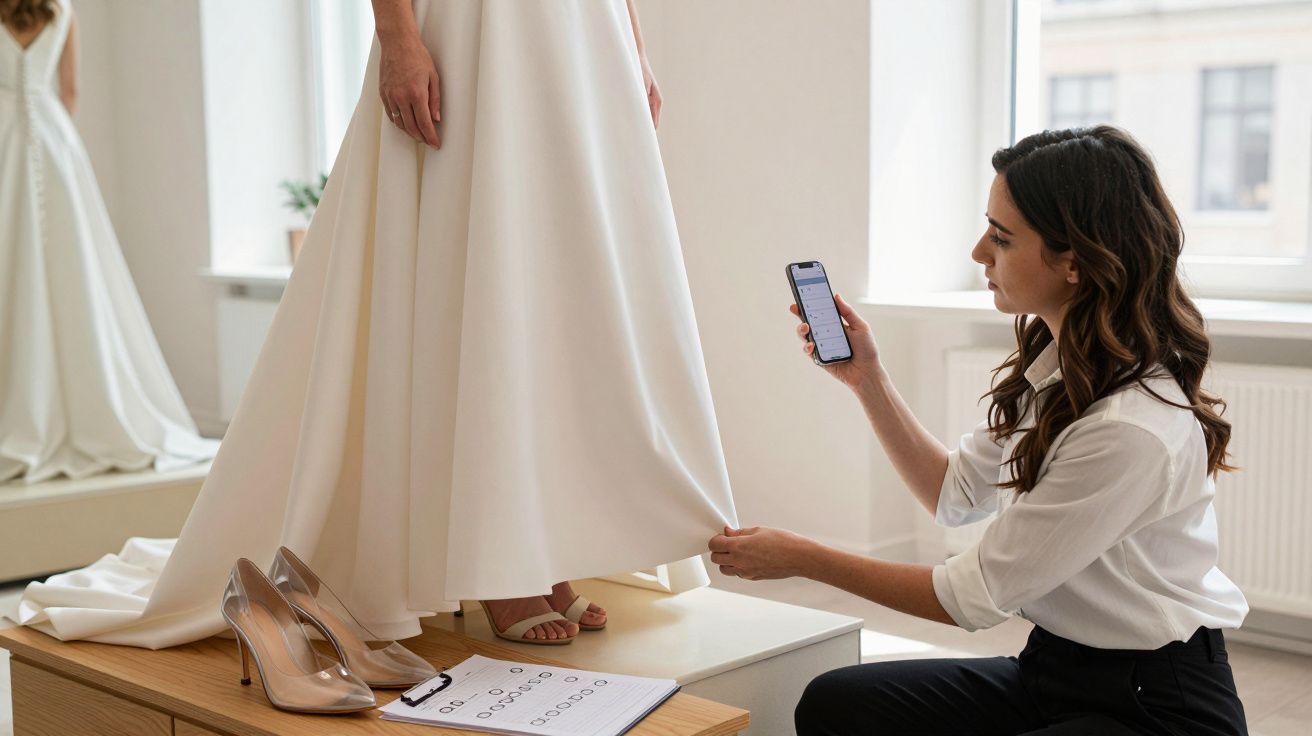
- Hemming to the right shoe height (and matching bustle placement to that new length)
- Adjusting the waist seam or bodice length (where feasible) so the dress hits your natural proportions
- Refining necklines (modesty panels, narrowing plunge, raising sides, reshaping illusion)
What alterations can’t do is change the underlying architecture without cost or compromise. A dress can be taken in more easily than it can be let out. A delicate beaded lace can’t always be moved without visible signs. And “making it lighter” is often about reducing layers-beautiful, but not always simple.
The “hidden potential” test: questions to ask before you buy
When you’re on a plinth under spotlights, it’s easy to either overcommit (“I’ll fix it all”) or write a dress off too quickly. A better approach is boring and practical: ask the questions that reveal whether the issues are alterable or fundamental.
Try this checklist while you’re still in the shop:
- Does it feel wrong because it’s big, or because it’s cut wrong for me?
- If the consultant clips it, does it improve in a way that looks realistic (smooth, balanced), or does it just look pinned?
- Is the main discomfort at the bust/waist/shoulders (usually fixable), or at the overall style (harder to fix)?
- Can I sit, lift my arms, and breathe without the dress fighting back?
- What’s the fabric telling me-does it want to drape, or does it want to be structured?
A dress with hidden potential usually gives you glimpses: the waist suddenly appears when clipped in the right spot; the neckline looks elegant when held up by a finger at the strap point; the skirt moves beautifully when it’s lifted to the correct hem height. You’re not imagining it. You’re seeing the finished version.
A realistic timeline (because last-minute fittings are where joy goes to die)
Alterations work best when there’s time for adjustments to settle, especially with heavier fabrics and layered skirts. Most brides need more than one fitting, and most dresses need more than one change.
A simple rhythm that keeps you sane:
- First fitting: establish the structure (bodice, bust, straps) and pin the hem.
- Second fitting: refine shape, confirm hem, plan bustle, test movement.
- Final fitting: finish details, practise bustling, check comfort with shoes and underwear.
If you’re changing your shoes, shapewear, or bra, bring the real items early. Bridal tailoring is precise; “similar” isn’t similar enough.
The quiet truth: the dress isn’t wrong, it’s unfinished
There’s a kind of permission in admitting that many gowns are meant to be customised. The boutique version is the draft. The altered version is the one you actually wear, in real light, on a real day, with your real body doing real things.
If you’re standing in a changing room thinking, “Why does this feel off when it’s supposed to be magical?”, it doesn’t mean you’re picky or ungrateful or choosing badly. It often means you’re noticing the gap between a standard pattern and a specific person.
And that gap is exactly where the best dresses finally become yours.
FAQ:
- How do I know if a dress has “alteration potential” or if it’s just not for me? If the issues are at anchor points (bust, waist, straps, hem), it’s usually good potential. If you dislike the overall silhouette or fabric feel, alterations won’t change the essence.
- Can any wedding dress be taken in by a lot? Many can, but heavy beading, lace motifs, and complex corsetry can limit how far you can go before it affects the design. A skilled seamstress can tell you what’s realistic.
- Why did the sample look better clipped than it will in real life? Clips pull fabric backwards and can over-smooth the front. Proper alterations redistribute fabric through seams, which is more stable but sometimes less “instantly snatched” than aggressive clipping.
- What should I bring to my first alterations appointment? Your wedding shoes (or the exact heel height), your underwear/shapewear plan, and any accessories that affect fit (straps, sleeves, jewellery that snags). Also bring photos of how you want it to sit.
- Is it normal for a dress to feel worse at the first fitting? Yes. The first fitting can feel exposing because pins, temporary marks, and half-finished adjustments aren’t flattering. It typically improves dramatically once the structure is sewn and the hem is set.




Comments
No comments yet. Be the first to comment!
Leave a Comment