
A seamstress once told me the quiet truth you only learn with a pin cushion in your hand: vintage wedding dresses are not “delicate” so much as they are engineered for a different life. When you add structural reinforcement and modern fitting logic, you’re not erasing history-you’re making it wearable for a real day of hugging, dancing, sitting, sweating, and being photographed from every angle.
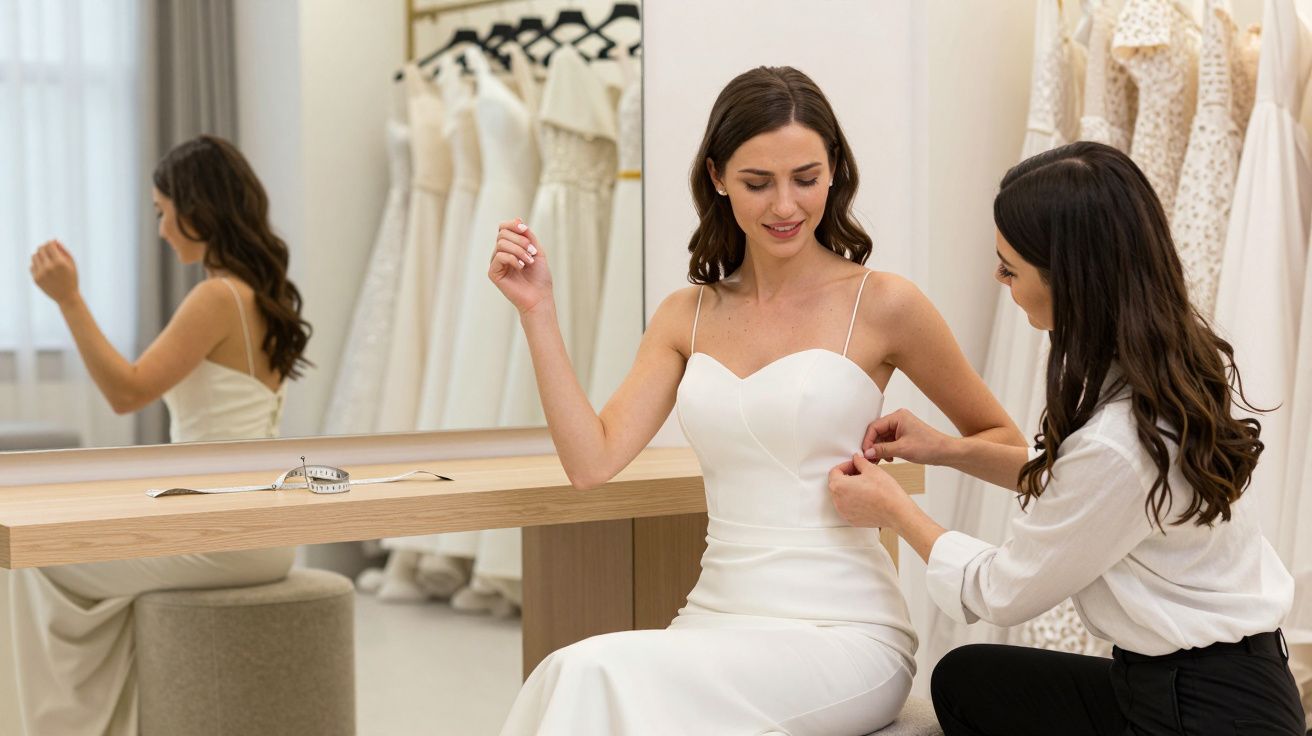
I watched her lift a 1950s bodice onto the mannequin like it was a sleeping thing. The lace looked calm, the satin looked loyal, and then she turned it inside out. Old seam allowances, hand-finished hems, and a zipper that had the confidence of a paperclip. “Beautiful,” she said, “but it’s not ready for now.”
What’s actually going on inside an old gown
Most vintage gowns were built around assumptions that don’t match modern weddings. Lingerie was different, posture was different, and the “support system” was often a separate foundation garment rather than something integrated into the dress. When people say a vintage dress “doesn’t sit right”, they’re usually describing internal architecture, not their body.
Time changes the materials in ways you can’t see in a mirror. Silk can shatter along stress points, cotton threads can weaken, and old interfacing can soften or detach so a bodice stops behaving like a bodice. The dress still looks romantic on a hanger, but on a moving person it can twist, slide, or strain at seams that have already done decades of work.
The other mismatch is expectation. Modern photos punish tiny fit problems: a gaping neckline, a waist seam that creeps, straps that slide a centimetre every hour. And weddings are long. A dress that survives a calm registry ceremony may not survive a full day of heat, canapés, speeches, and a dance floor.
The modern tailoring logic that keeps the romance (and stops the panic)
The goal isn’t to “modernise” the look. It’s to modernise the load-bearing system so the original fabric isn’t asked to do impossible labour. That means treating the dress like a structure: distribute weight, reduce friction, and protect the weakest fibres from stress.
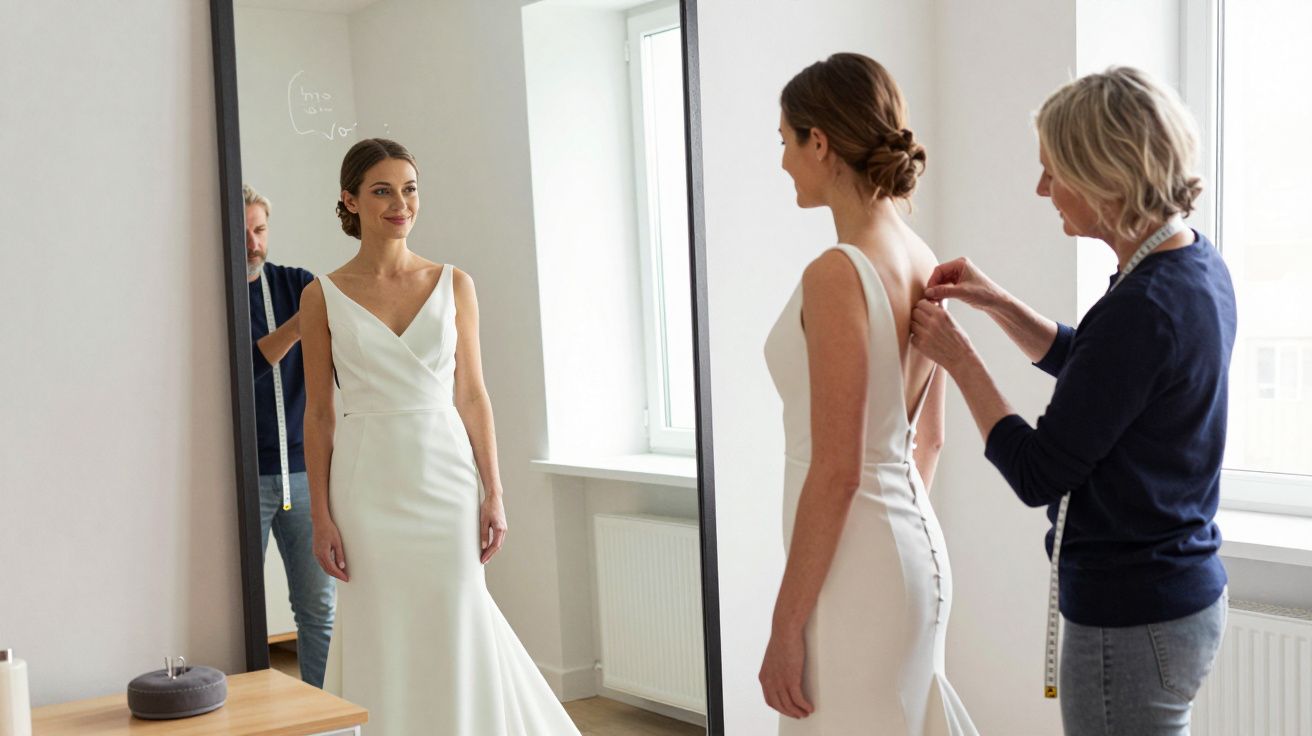
A good tailor starts with questions that sound unromantic and end up saving the day. Where does the dress actually hang from-shoulders, waist, hip? What needs to stay absolutely still (bodice, neckline) and what can float (skirt, sleeves)? How will it behave when you sit, lift your arms, or get warm?
Then they build invisible solutions that behave like scaffolding. Think of it as installing a stable interior so the vintage exterior can keep being itself.
- Add a waist stay (a firm inner ribbon) so the bodice doesn’t drag down the skirt.
- Use internal corselet or light boning channels to stop buckling without crushing the original fabric.
- Replace or back up old closures: hooks, eyes, poppers, and zips that are on their last nerve.
- Stabilise stress points with discreet tapes, underlays, or hand-stitched reinforcement at seams.
- Make alterations reversible where possible, so the dress remains historically respectful.
Let’s be honest: nobody buys a vintage gown because they love the idea of inner construction. They buy it because it makes their chest tighten in a good way. Modern tailoring logic is simply the thing that lets that feeling last past the first hour.
Structural reinforcement: where it matters (and where it can go wrong)
Structural reinforcement is most useful where movement and gravity team up: waist seams, underarms, side seams, and zipper areas. The trick is compatibility. You can’t slap a stiff modern interfacing onto fragile silk and expect harmony; you’ll create new stress lines and invite tearing at the edges.
Reinforcement should be sympathetic: soft where the fabric is soft, firm where the garment needs authority. Often that means adding a separate inner layer-an under-bodice, a lining, a corselet-so the original textile is no longer the primary support. The dress stops “holding you up”, and instead sits on a structure that’s doing the heavy lifting.
A few common, quiet wins:
- Underlays under lace to prevent snagging and to spread tension across a larger area.
- Rebuilt seam allowances where old stitching has perforated the fabric like a tear-off receipt.
- New suspension points (tiny thread carriers, inner straps) so weight isn’t hanging from a single aged seam.
- Skirt support (light petticoat, tulle layer, or hem facing) so the hem doesn’t drag and distort the waist.
And a few common mistakes:
- Reinforcing only the tear, not the reason it tore (usually strain + movement + weak fibres).
- Using modern materials that are too rigid, creating stress fractures in old cloth.
- Ignoring perspiration and friction zones, which can destroy fragile fabrics faster than dancing ever will.
How to approach fittings without breaking the dress (or your heart)
Start earlier than you think. Vintage gowns often need more appointments because you’re discovering the garment’s limits as you go, and sometimes you must change the plan to protect the fabric. A tailor can do miracles, but they can’t make compromised silk behave like new polyester.
Bring the right underpinnings to every fitting, and keep them consistent. A different bra or shapewear changes the whole geometry, and vintage bodices are less forgiving because their original shaping is specific. If you plan to wear sleeves, bring a sense of reality about movement: you need to lift your arms, not just look lovely with them down.
If you’re between sizes, resist the urge to “force” the dress to meet you. The smartest logic is often to build an internal fit layer and let the outer vintage layer stay slightly less stressed. It photographs better, it feels better, and it keeps the dress intact.
“A vintage gown should never feel like you’re borrowing it from a museum,” the seamstress said. “It should feel like it chose you-and that it can cope with your day.”
- Book a specialist tailor, not just any alterations service.
- Expect reinforcement and restoration to cost more than a simple hem.
- Prioritise stability at the bodice; a skirt can be forgiving, a neckline cannot.
- Plan for contingencies: spare hooks, a repair kit, and someone who knows where it is.
Why this isn’t about perfection-it’s about freedom
There’s a moment in every wedding day when you forget the dress exists. That’s the goal, especially with something old. Modern tailoring logic gives you that freedom: you get the history, the texture, the story-and you also get to breathe, eat, hug your nan, and dance without checking your seams like a nervous technician.
Vintage can be worn, not just admired. It just needs to be supported like the heirloom it is.
| Point clé | Détail | Intérêt pour le lecteur |
|---|---|---|
| Old construction, new demands | Fabrics and internal supports were made for different underpinnings and lifestyles | Explains why “it looked fine on the hanger” isn’t enough |
| Structural reinforcement | Waist stays, inner layers, stabilised seams, stronger closures | Prevents tearing and sliding during a long day |
| Tailoring logic over guesswork | Fit based on load paths, movement, and fabric limits | More comfort, better photos, fewer emergencies |
FAQ:
- Can a vintage wedding dress be altered without ruining its value? Often, yes-especially if changes are reversible and the tailor avoids cutting original embellishment. Adding internal support layers is usually kinder than aggressive reshaping.
- Do I need structural reinforcement if the dress fits right now? If the fabric is fragile, the closures are old, or the bodice carries weight, reinforcement is still wise. Fit at rest isn’t the same as fit after eight hours of movement.
- What’s the biggest red flag when trying on vintage gowns? Fabric “shattering” (tiny cracks, especially in silk), loud strain lines at seams, and any tearing around the zip or underarms. If you hear fibres protest, stop and reassess.
- Is it better to size up or size down with vintage? Size up, if you have a choice. It’s generally safer to take in with internal structure than to let out seams that may not exist or may be too weak to trust.
- How far ahead should I start alterations? Ideally 3–6 months before the wedding, longer if the gown is very old, heavily embellished, or needs restoration work as well as fitting.



Comments (0)
No comments yet. Be the first to comment!
Leave a Comment