
The first time I tried on winter wedding dresses, I expected “warm enough” to be a styling problem: add sleeves, add a faux-fur stole, job done. Then I stood still in a fitting room under bright lights and realised thermal comfort is a construction problem first - the kind you only notice once you’re shivering in a beautiful gown that was built for a July aisle.
Cold weather doesn’t just make you feel chilly. It changes how fabrics behave, how you move, how long you can hold a pose for photos, and whether you’re quietly counting minutes until you can put your coat back on. The right winter dress isn’t just more fabric; it’s a different internal architecture.
The quiet problem with “just add layers”
Most bridal gowns are designed around a simple assumption: stable indoor temperatures and a body that can breathe. In winter, you’re often moving between heated rooms, draughty doorways, outdoor portraits, and a ceremony space that looks romantic precisely because it’s old and stone-cold.
Layering on top can help, but it can also distort the silhouette, snag delicate beading, or compress insulation so it stops insulating. And the biggest issue is the one nobody sells you: if the dress itself is thin, slippery, and unstructured, it won’t hold warmth where you need it - around your core - no matter how many accessories you pile on.
You can’t “style” your way out of heat loss if the gown is built like a summer dress with long sleeves.
What winter construction actually needs to do
Think of a winter gown as two dresses: the one people see, and the one that manages your temperature. The goal isn’t to trap heat until you sweat; it’s to create a stable microclimate so you stay comfortable across the whole day.
That means four practical jobs:
- Reduce drafts (especially at neckline, waist, and hem)
- Buffer temperature swings between indoors and outdoors
- Allow movement without yanking sleeves or shifting bodices
- Stay smooth over base layers if you choose to wear them
A good atelier will talk about these like engineering decisions, not “winter vibes”.
The invisible layer that changes everything: lining and interlining
In warm-weather gowns, lining is often treated as a modesty layer. In winter, lining becomes your first line of defence.
A winter-friendly build usually involves:
- A stable lining (silk habotai, charmeuse, breathable viscose) that feels good against skin and doesn’t cling when you add tights or a slip.
- An interlining (a hidden middle layer) that adds warmth and body without bulk. This is where cleverness lives: thin flannel-like layers, soft knit interlinings, or brushed fabrics can lift thermal comfort without changing the look from the outside.
- Strategic structure (boning placement, waist stay, internal corsetry) so the dress sits close enough to reduce drafts, but not so tight you can’t breathe when you’re cold and tense.
If the outer fabric is lace or a light crepe, this internal sandwich matters even more. The outside can stay delicate; the inside does the work.
Sleeves are not all equal (and neither are armholes)
Winter brides often request sleeves, then feel surprised when they can’t lift their arms comfortably or the bodice shifts in photos. That’s not you being fussy - that’s pattern cutting.
For genuine warmth and comfort, sleeves need:
- A properly shaped armscye (armhole) so you can move without dragging the bodice.
- Room for a thin underlayer if you plan to wear one (even a nude thermal top changes friction and fit).
- A lining that doesn’t grab when your skin cools and dries.
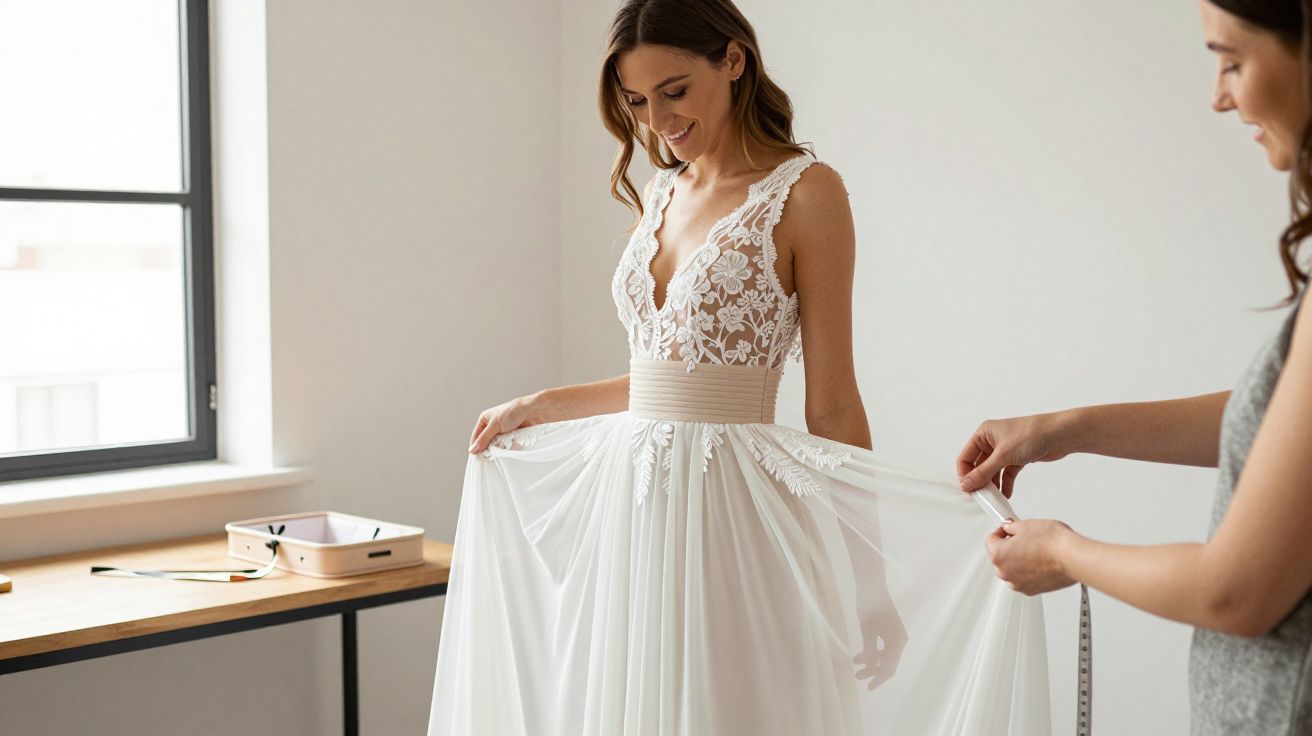
Lace sleeves over bare skin can look cosy and feel freezing. If you want the illusion of lace but the comfort of coverage, a lined sleeve (or a lace overlay on a fine, skin-toned base) is often the difference between “I’m fine” and “get me indoors”.
Necklines, backs, and the places cold sneaks in
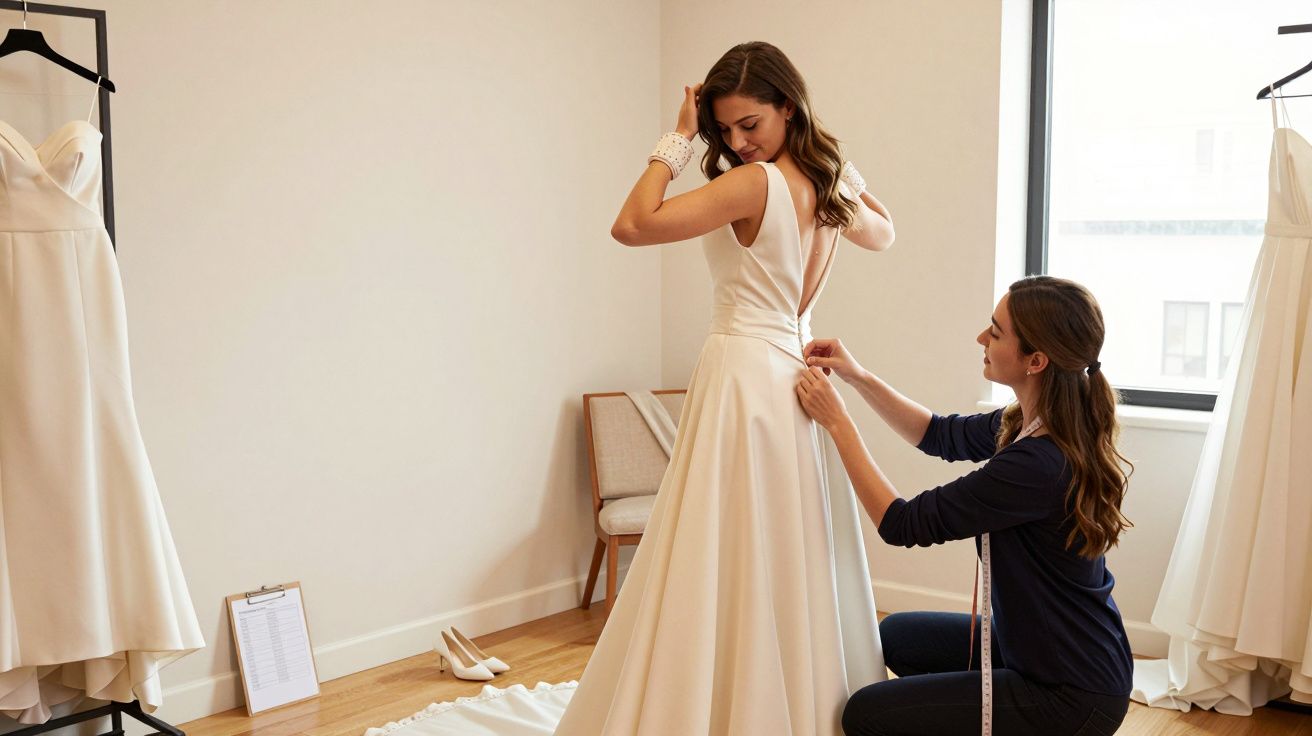
The most dramatic winter pain point is the open back. It looks stunning, but it’s also a perfect vent.
Construction tweaks that keep the design but improve warmth:
- Illusion panels (tulle or mesh) that block drafts without visually “closing” the back.
- Higher inner bodice with an outer cutaway, so you get the shape while keeping coverage.
- Button plackets with proper underlaps, rather than decorative buttons over a gap.
A winter dress can still be low, sheer, and romantic - it just needs a hidden plan.
Hem, train, and why heavier isn’t always warmer
It’s tempting to go heavier for winter: mikado, satin, velvet. Sometimes that works beautifully. But warmth isn’t only weight; it’s also air control and moisture control.
A heavy skirt with a sparse lining can feel cold because the fabric sits away from the body, letting air circulate. A lighter skirt with a smart interlining can feel warmer because it holds a steadier layer of air.
Also consider the reality of the day:
- Outdoor paths, damp grass, salted pavements.
- A train that becomes a cold, wet sponge by the time you re-enter for dinner.
- A hem that drags, chills, and then steams indoors.
Often the most winter-proof choice is a slightly shorter train, a bustle designed to lift cleanly, and a lining that doesn’t hold moisture.
“Warmth isn’t a vibe. It’s sealing, layering, and fit,” a seamstress once told me while pinning a sleeve that finally let the bride hug her mum properly.
The simple checklist to discuss at your fitting
If you want winter wedding dresses that look effortless but feel liveable, bring these points to your fitter or dressmaker:
- What’s the lining and is there an interlining option?
- Can the bodice be stabilised with an inner corset or waist stay?
- How are sleeves cut, and can I raise my arms without pulling the dress?
- Is the back/neckline drafty, and can we add an illusion panel or inner layer?
- What’s the plan for the train in wet conditions?
You’re not being high-maintenance. You’re preventing a long day of clenched shoulders and blue hands.
| Key point | What changes in winter | Why it matters |
|---|---|---|
| Inner layers | Lining + interlining, not just “thicker fabric” | Improves thermal comfort without bulk |
| Mobility | Sleeve/armhole patterning and internal support | Warmth without restricted movement |
| Draft control | Neckline/back/closure details | Stops cold air sneaking in during photos |
FAQ:
- Can I wear thermals under a wedding dress? Yes, but plan for it at alterations. A thin, smooth base layer can work well if the dress has enough ease and a lining that won’t cling.
- Is velvet automatically a good winter choice? Velvet can be warm, but it’s also heavier and can show pressure marks. If you love the look, ask about lining and structure so it doesn’t feel cold at the bodice or drag at the hem.
- Will adding sleeves make me warmer? Sometimes. Lace sleeves without lining can still feel cold outdoors. A lined sleeve or an illusion base under lace is often much warmer.
- How do I keep an open back but stay warm? Consider an illusion panel, a higher inner bodice with a cutaway outer layer, or a proper underlap behind buttons to block drafts.
- What’s the biggest construction mistake with winter gowns? Treating warmth as an accessory problem. If the gown isn’t lined and sealed properly, you’ll feel cold no matter how many wraps you buy.




Comments (0)
No comments yet. Be the first to comment!
Leave a Comment